Introduction
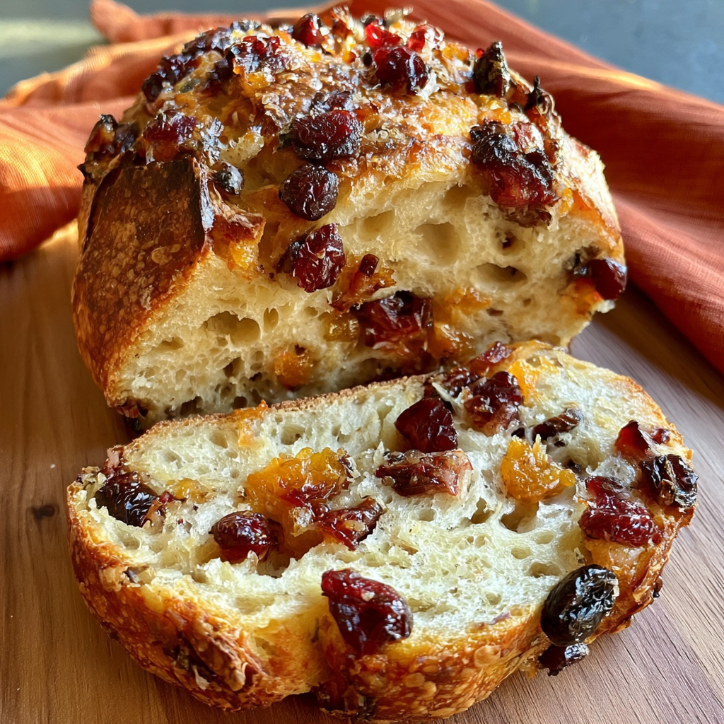
This savory cranberry orange sourdough blends Polish-American heritage with bright Midwestern autumn flavors. The tangy sourdough pairs with tart cranberries and fresh orange zest. It fills your kitchen with warmth and nostalgia, just like my grandmother Elizabeth’s bread did. Now I make it for my husband and kids, Ella and Peter.
Why You’ll Love This Recipe
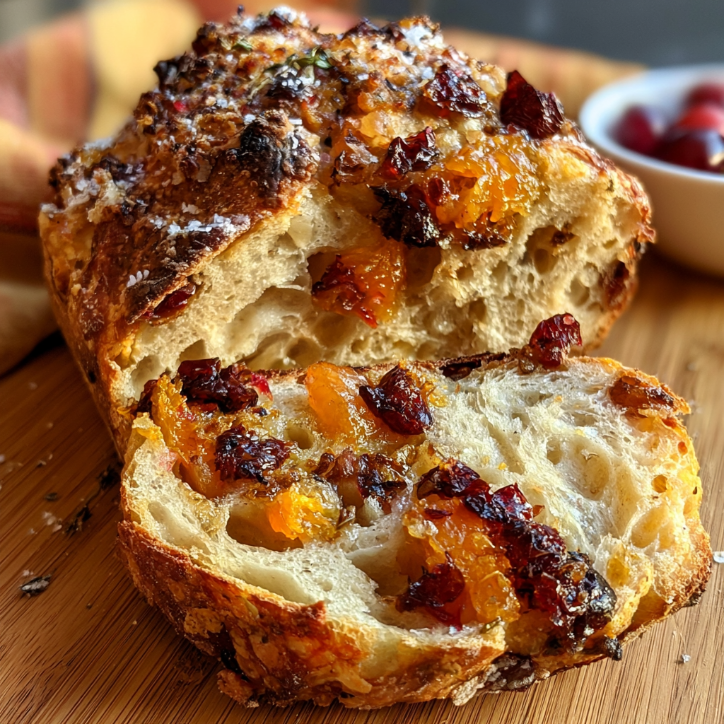
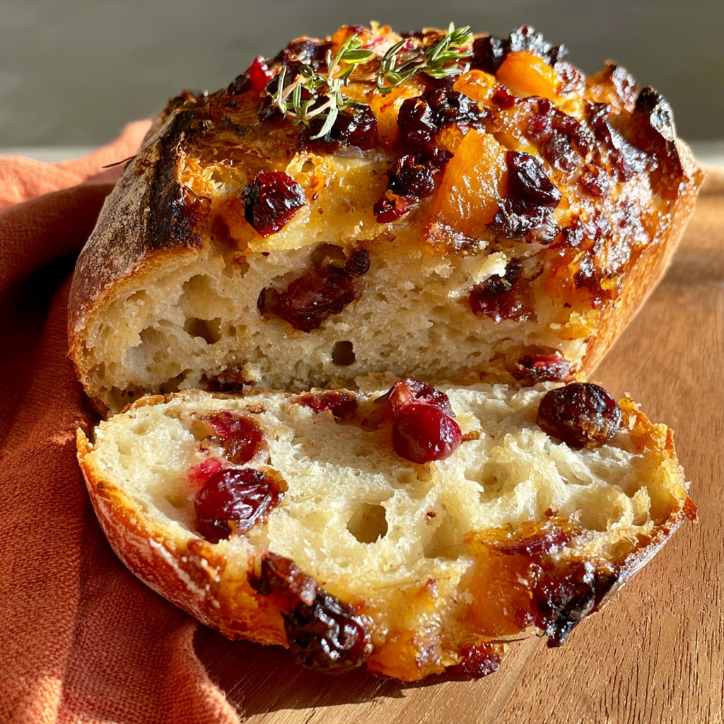
This bread is a showstopper yet simple to master. The mature sourdough starter provides complex tang, while cranberries add tartness and orange zest brings citrus brightness. It’s savory with a hint of sweetness, perfect for cheese boards or breakfast toast. The texture is divine: crackly golden crust with a soft, airy crumb studded with fruit.
It’s a forgiving recipe for both seasoned bakers and beginners. Minimal hands-on time lets natural fermentation do the work. This loaf uses your bubbly active starter and fills your home with a welcoming aroma. It’s family-friendly and makes any meal feel special.
Ingredients
Here’s what you’ll need to bring this loaf to life.
- For the Dough:
- 100 grams active sourdough starter (fed and bubbly)
- 350 grams lukewarm water
- 500 grams bread flour (plus extra for dusting)
- 10 grams fine sea salt
- 100 grams dried cranberries (unsweetened or lightly sweetened)
- Zest of 2 large oranges (about 2 tablespoons)
- For the Topping (Optional but Delicious):
- 1 tablespoon fresh orange zest, for sprinkling
- 1 tablespoon coarse sugar or flaky sea salt
Ingredient Notes:
- Starter: Ensure your starter is active and at its peak—doubled in size and full of bubbles. This is crucial for a good rise.
- Flour: Bread flour gives a chewy, structured crumb. All-purpose flour works but yields a less chewy texture.
- Cranberries: If very dry, soak in warm water or orange juice for 10 minutes, then pat dry. This prevents them from drawing moisture from the dough.
- Oranges: Use organic oranges for zesting. Wash and dry thoroughly first.
Step-by-Step Instructions
Let’s get started. This process is a labor of love worth every minute.

YOUR COMPLETE RECIPE COLLECTION
Stop Searching for Meal Ideas—Get 50+ Delicious Recipes in One E-Book
Get the complete recipe e-book and discover delicious meal ideas collected in one convenient place.
Discover All 50+ Recipes- Mix the Dough (Autolyse): In a large bowl, combine starter and lukewarm water. Stir until mostly dissolved. Add bread flour and mix until no dry bits remain. Cover with a damp towel and rest for 30-60 minutes. This develops gluten naturally.
- Add Salt and Flavorings: Sprinkle salt over the dough. Add cranberries and orange zest. Incorporate thoroughly with your hands. The dough will be shaggy—that’s normal. Squeeze and fold until well distributed.
- Bulk Fermentation (Stretch and Folds): Over 3-4 hours, perform “stretch and folds.” Every 30 minutes, wet your hands, grab one side of the dough, stretch it up without tearing, and fold over the center. Repeat on all four sides. This strengthens the dough. After 3-4 hours, the dough should be puffy, increased by 50%, with surface bubbles.
- Shape the Loaf: Turn dough onto a lightly floured surface. Shape into a round boule by folding edges into the center, then rolling over to create surface tension. Use a bench scraper for a tight, smooth ball.
- Cold Proof (Second Rise): Place shaped dough seam-side up in a floured proofing basket. Cover and refrigerate for 12-18 hours. This develops flavor and makes scoring easier.
- Preheat and Bake: Place a Dutch oven with lid in your oven and preheat to 450°F (230°C) for at least 45 minutes. Carefully remove the hot Dutch oven. Turn cold dough onto parchment paper. Score the top with a sharp knife. Lower dough into the Dutch oven.
- Bake Covered and Uncovered: Cover with lid and bake for 25 minutes. Remove lid and bake another 20-25 minutes until deep golden brown and hollow when tapped.
- Cool Completely: Transfer to a wire rack and cool for at least 1-2 hours before slicing. This sets the crumb and prevents gumminess.
What Makes This Recipe Special
- ✓Quick and easy to prepare
- ✓Packed with flavor and nutrition
- ✓Perfect for any occasion
- ✓Customizable to your taste preferences
- ✓Budget-friendly ingredients
Expert Tips for Success
These tricks make all the difference for a perfect loaf.
- Don’t Skip the Cold Proof: The overnight rest is non-negotiable for best flavor. It deepens the tang and makes dough easier to handle and score, giving beautiful “ears” on the crust.
- Master the Stretch and Fold: Be gentle but consistent. These folds build gluten structure that traps gas, giving an open crumb. Skipping them results in dense, flat bread.
- Use a Kitchen Scale: Baking is a science. Measuring by weight ensures consistent results. A digital scale is essential for sourdough, ensuring perfect hydration every time.
Variations and Substitutions
This recipe is a great base for creative twists. Here are favorite variations.
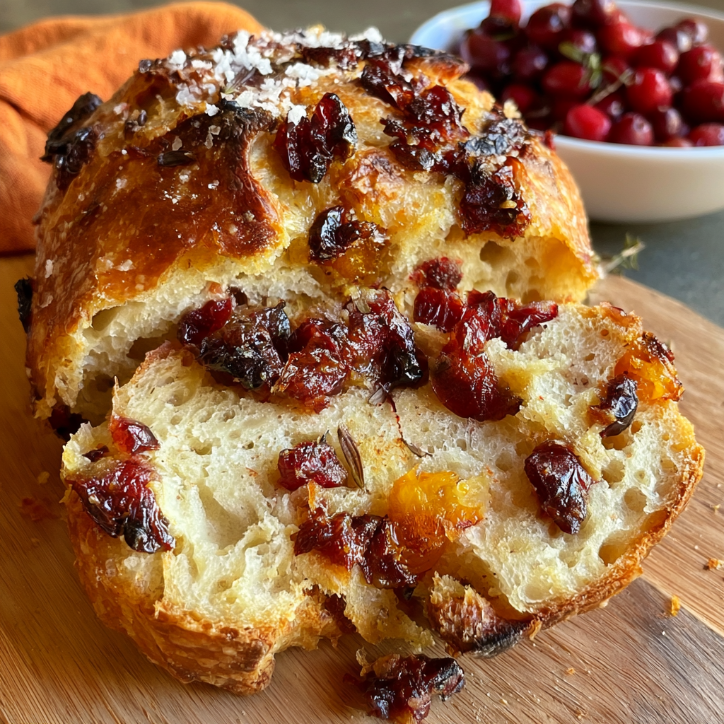
- Herby & Savory: Add 1 tablespoon fresh chopped rosemary and 1 teaspoon cracked black pepper with the cranberries and orange zest. Rosemary pairs beautifully with citrus and tart fruit.
- Nutty Crunch: Fold in 100 grams toasted, roughly chopped pecans or walnuts. Nuts add textural contrast and rich, toasty flavor that complements orange.
- Spiced Autumn: Add 1 teaspoon ground cinnamon, 1/2 teaspoon ground ginger, and a pinch of ground cloves to the flour during autolyse. This creates a holiday-flavored loaf.
Serving Suggestions
This bread shines with the right accompaniments. For an appetizer, slice thick and serve with sharp cheddar, creamy brie, and prosciutto. Tart cranberries and bright orange cut through rich cheese and meat.
For breakfast, toast a slice and spread with salted butter or mascarpone. It’s also divine for leftover turkey sandwiches after Thanksgiving. Pair with butternut squash soup or a hearty winter salad.
FAQs
1. Can I use a “discard” starter instead of an active one?
No. For a good rise and classic sourdough texture, you need an active, bubbly starter at its peak. Discard is better for recipes using baking powder or soda as leavener. This bread relies solely on yeast in your active starter.
2. My dough is very sticky and hard to handle. What am I doing wrong?
This is normal. Sourdough is high-hydration and naturally sticky. Keep your hands and work surface lightly floured or wet. The stretch and fold technique builds strength and reduces stickiness over time. Don’t add too much extra flour or you’ll get a dense loaf.
3. How do I store this bread, and can I freeze it?
Store cut-side down on a cutting board at room temperature for up to 3 days, or in a paper bag. Avoid plastic bags—they soften the crust. For longer storage, slice and freeze in a zip-top bag for up to 3 months. Toast slices straight from the freezer.
Final Thoughts
Baking this sourdough is about creating warmth and connection for loved ones. It’s the smell of home, the joy of sharing something handmade, and the pleasure of a perfect slice. I hope this recipe brings happiness to your kitchen. Don’t be afraid to make it your own—happy baking!
More Recipes to Warm Your Kitchen
If you loved this savory cranberry orange sourdough, try my Creamy Chicken and Dumplings for a soul-warming dinner, or Fluffy Buttermilk Pancakes for a weekend breakfast. For something sweet, my Cinnamon Apple Muffins are a family favorite, and Classic Apple Cake is the perfect ending to any meal. For pure comfort, my Hearty Vegetable Beef Soup is always a hit.
Join us on our Facebook Page and Facebook Group—and follow us on Pinterest for daily inspiration!
· American ·
Irresistible Savory Cranberry Orange Sourdough
A beautifully tangy and rustic sourdough loaf studded with tart dried cranberries and bright, fresh orange zest. This savory-sweet bread is perfect for holiday tables, cheese boards, or simply toasted with butter.
Keep the screen of your device on while you follow the steps.
- Mix starter, water, and flour until no dry bits remain. Let rest for 30-60 minutes.
- Add salt, cranberries, and orange zest. Mix thoroughly.
- Perform 4 sets of stretch and folds every 30 minutes over 3-4 hours.
- Shape the dough into a tight boule.
- Place in a proofing basket and refrigerate for 12-18 hours.
- Preheat a Dutch oven to 450°F (230°C).
- Score the dough and bake covered for 25 minutes.
- Remove lid and bake for another 20-25 minutes until golden brown.